HISTORY
Eight inches to three and a half
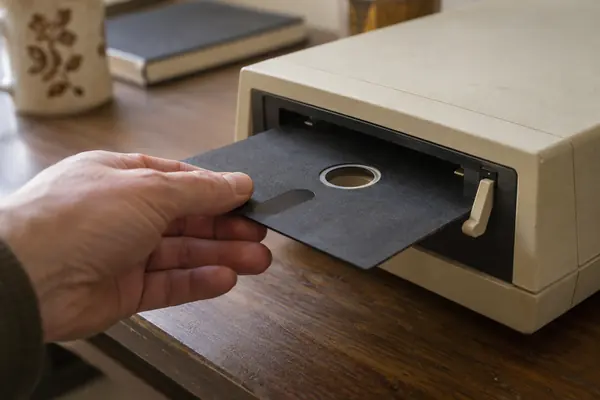
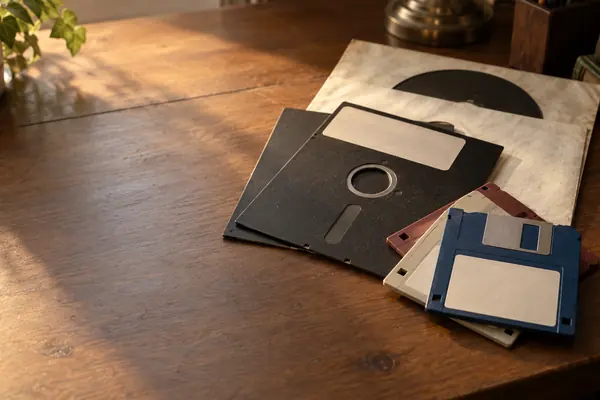
IBM began selling floppy drives in 1971. By 1986 a 3.5-inch disk in a plastic case held 1.44 megabytes.
Identify your disk doodlefloppy
A SHORT HISTORY, AND A RESCUE PLAN
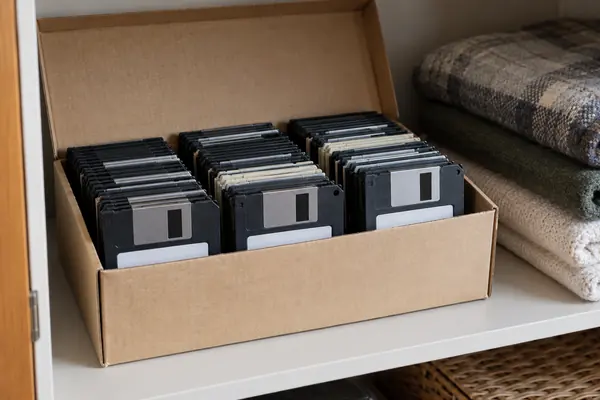
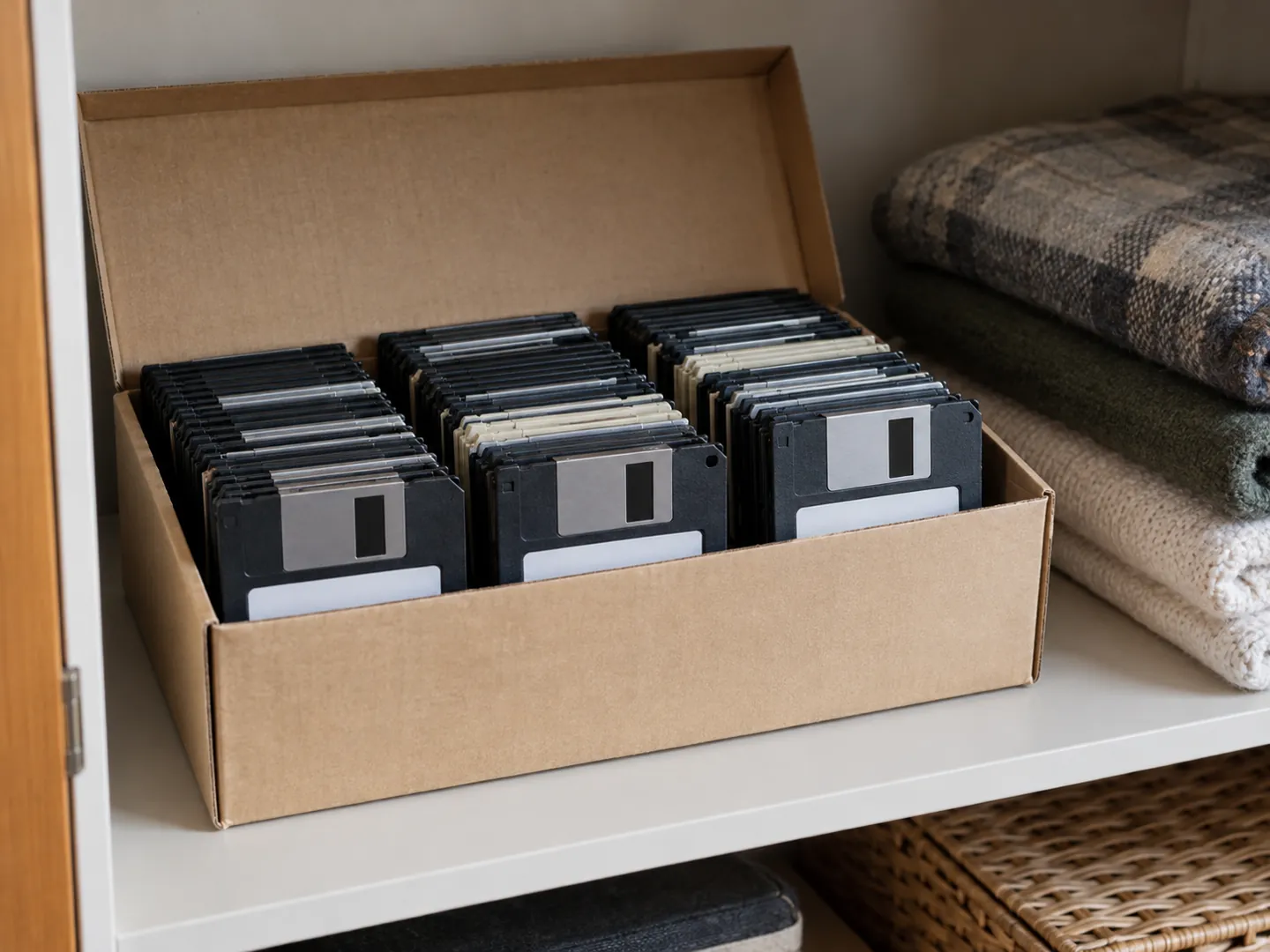
Many homes still have a box of floppy disks somewhere.
Identify your disk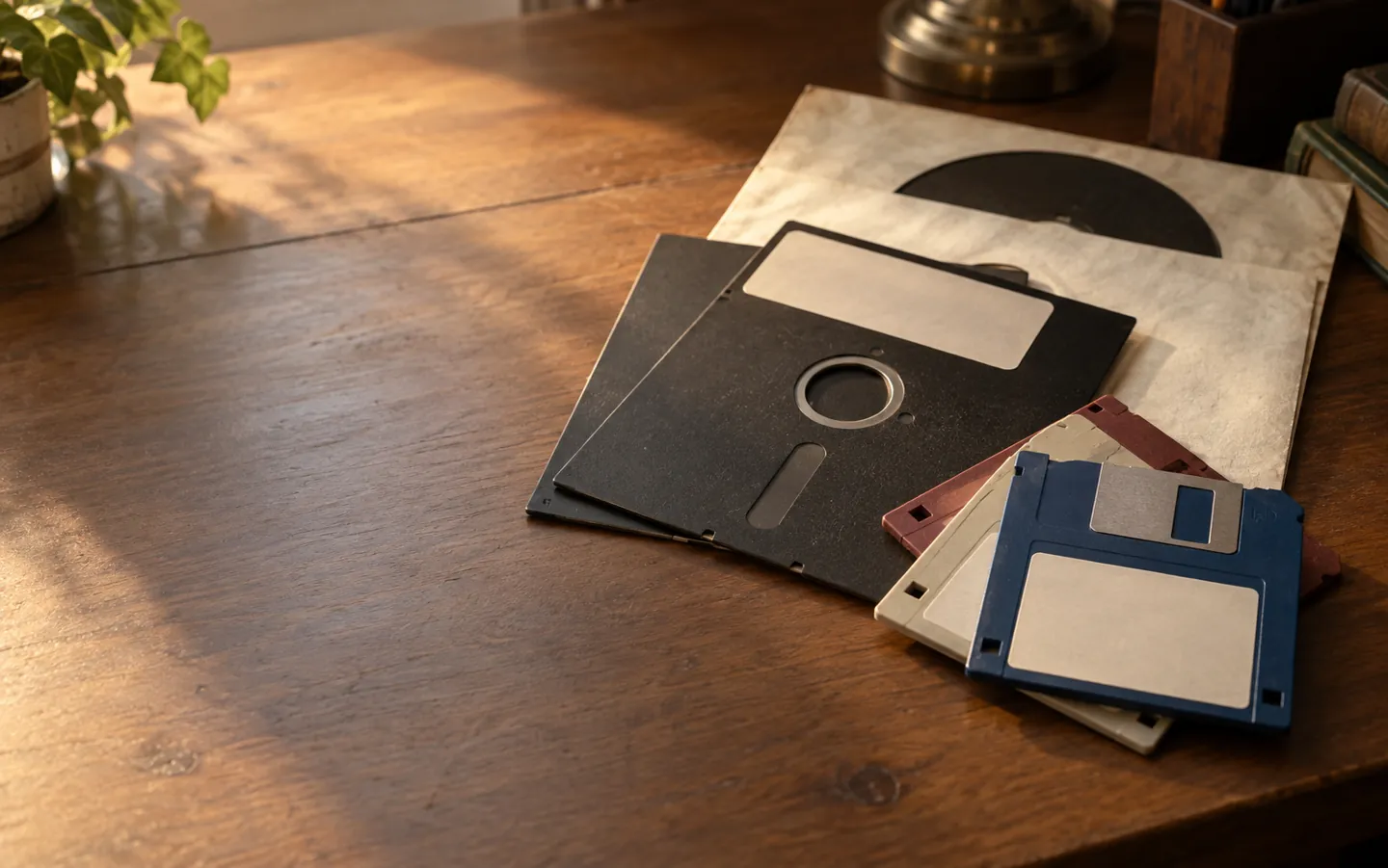
COPY IT OFFbefore the drives are gone
They held letters, school work, games and early digital photos. The disks may still be readable, but the drives that read them are getting scarce. Archivists say the safest move is to copy the files off before access is lost.
Updated
THE SHORT ANSWER
Floppy formats changed fast.
Each new size pushed the last one out.
HISTORY
IBM began selling floppy drives in 1971. By 1986 a 3.5-inch disk in a plastic case held 1.44 megabytes.
Identify your diskOBSOLESCENCE
The Digital Preservation Coalition says losing access to hardware and software often happens long before the media itself deteriorates.
Why it mattersSTORAGE
Keep magnetic media in a cool, dry, stable place, away from strong magnets, smoke and dust, and handle it as little as possible.
How to do itA QUICK DISK CHECK
Pick a size to see when it appeared and what it held. The bar shows how specialised the equipment to read it has become, based on a national library's preservation lab.
Dates and capacities from IBM and Computer History Museum histories; equipment notes from the Library of Congress preservation blog (2021).
TWO NUMBERS WORTH KNOWING
One figure for the disks,
one for the drives that read them.
5 billion+
Floppy disks sold each year at the mid-1990s peak
IBM says more than 5 billion floppy disks were sold annually at their peak in the mid-1990s. By the mid-2000s, floppies had gone the way of the punched card.
DISKS · IBM
≈ 120 million
Floppy drives made per year at the 1990 peak
The Computer History Museum says floppy drive manufacturing peaked in 1990 at around 120 million units a year, then declined.
DRIVES · COMPUTER HISTORY MUSEUM
The Library of Congress says the vast majority of the hundreds of thousands of removable media items in its collections are optical disks and floppy disks.
FOUR STEPS FOR A BOX OF DISKS
These steps draw on guidance written for archives, scaled down for a box found in a loft. For anything precious or badly damaged, specialist recovery services and archives have the right equipment.
Keep disks somewhere cool, dry and stable, free of smoke and dust, and well away from strong magnets.
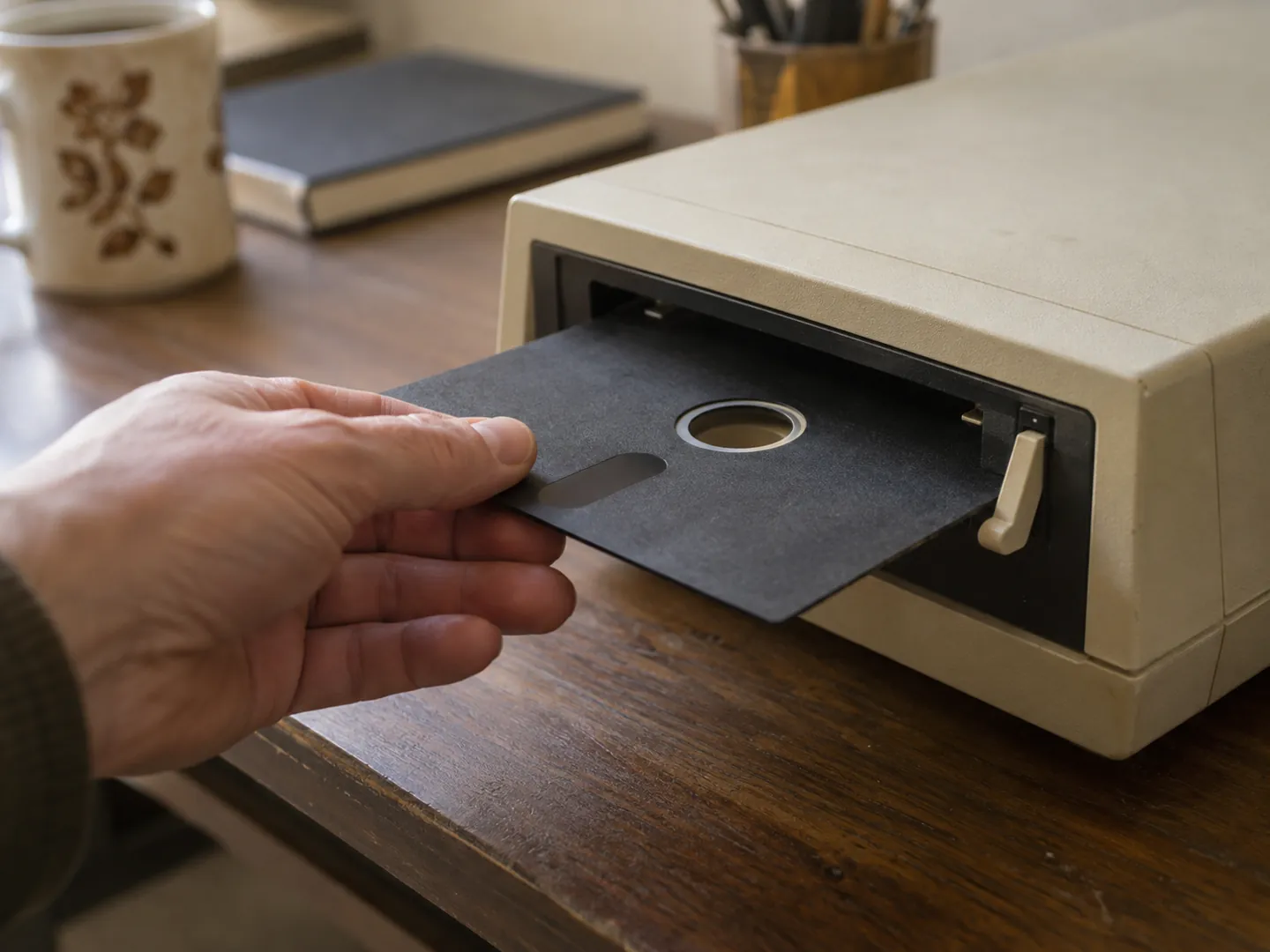
Every use adds wear. The aim is to read each disk once and work from the copy afterwards.
Preservation guidance says recovering obsolete formats later is likely to be expensive compared with acting early.
Library of Congress staff suggest scanning the disk and its sleeve or notes, keeping them with the copied files, and making more than one copy.
WHY DISKS FAIL
The Digital Preservation Coalition says head and media crashes are one of the most common causes of damage to magnetic storage, and that smoke and debris can cause data loss because the heads sit so close to the surface. Poor storage can lead to oxidation or problems with the binding layer.
Magnets are less of a threat than people think: the handbook says damage from strong magnetic fields is rare and usually needs the magnet within about 50 mm. Archives make a disk image so the original only has to be read once, which spares both the disk and the equipment from repeated wear.
Questions
An IBM team began work in 1967 on a way to load instructions and software updates into mainframe computers. IBM began selling floppy disk drives in 1971 and received patents for the drive and disk in 1972.
The original 8-inch disk held the equivalent of 3,000 punched cards. The first 5.25-inch drive held 110 KB, and the 3.5-inch disk reached 1.44 MB.
Often the problem is the drive, not the disk. Preservation guidance says losing access to hardware and software often happens long before the media itself deteriorates.
It can, but the Digital Preservation Coalition says damage from strong magnetic fields is rare and usually requires the magnet to be within about 50 mm.
They make a disk image, a complete copy of the disk, so the original only needs reading once. The Library of Congress then explores the image to export files and check for personal information.
ABOUT THIS NAME
doodlefloppy.com is part of the DoodleSale portfolio. It isn't in an auction right now, but you can ask about leasing it.